In Hindu tradition, a home is more than a building — it’s a sacred space, and the name it carries is often chosen as a blessing. Hindu house names draw on deities, virtues, and spiritual ideas that families hope will shape the life lived inside. Here are 52 Hindu house names with their Devanagari script and English meaning, grouped by theme to help you find one that fits your home. Grab the free downloadable PDF of the full list below.
Note on this post: these names draw on widely used Sanskrit and Hindi vocabulary and common house-naming words (Bhavan, Niwas, Griha, Dham, Sadan — all meaning “house,” “residence,” or “abode”). Because many of these names reference deities and sacred concepts, we’d recommend a quick read-through by someone familiar with your family’s own traditions before finalizing — practices and preferences vary across regions and communities.
The Significance of a House Name in Hindu Tradition
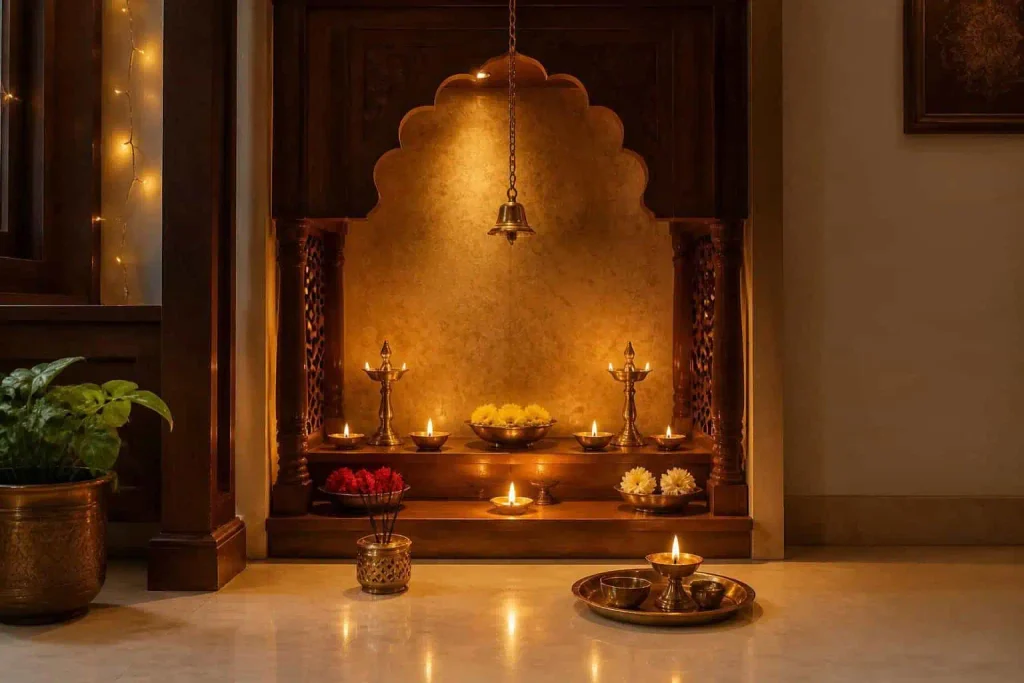
In many Hindu households, a house name is chosen to invite blessings — peace, prosperity, protection, or wisdom — into daily life. Some families name their home after a deity they particularly revere, while others choose a name that reflects a value like truth, devotion, or non-violence. Neither approach is more correct than the other; what matters is that the name carries real meaning for the family.
Creative Ideas for Your Hindu House Name
Deity-Inspired Names
Many families name their home after a deity they feel a personal connection with. गणेश भवन (Ganesh Bhavan) means “House blessed by Lord Ganesha, remover of obstacles,” a popular choice for a new home, while लक्ष्मी सदन (Lakshmi Sadan) means “House blessed by the Goddess of wealth.”
Values & Virtues
Some names focus on the ideals a family hopes to live by. सत्य निवास (Satya Niwas) means “House of Truth,” while अहिंसा गृह (Ahimsa Griha) means “House of Non-Violence.”
Peace & Spiritual Calm
For a home meant to be a quiet refuge, similar in spirit to the calm in our Buddhist house names, consider शांति धाम (Shanti Dham), “Abode of Peace,” or आत्मा शांति भवन (Atma Shanti Bhavan), “House of Inner Peace.”
Sanskrit-Rooted Classics
Timeless names drawn from Sanskrit tradition, like those in our Sanskrit house names collection, include अमृत धाम (Amrit Dham), “Abode of Nectar and Immortality,” and वेदांत गृह (Vedant Griha), “House of Vedic Wisdom.”
Nature & Sacred Symbols
Names drawn from sacred plants and symbols are another popular option — तुलसी भवन (Tulsi Bhavan) means “House of the Sacred Tulsi Plant,” while दीप ज्योति गृह (Deep Jyoti Griha) means “House of the Sacred Lamp.”

Tips for Choosing the Perfect Hindu House Name
- Personal meaning: choose a deity or value your family genuinely connects with, rather than just a popular name.
- Family agreement: involve elders in the choice — many families treat the house name as a shared blessing.
- Respect and sensitivity: if you’re naming after a deity, make sure the name feels respectful in tone and context.
- Simplicity: shorter names are easier for guests to say and remember.
- Say it aloud: Sanskrit-rooted names often have a pleasing rhythm — make sure yours flows naturally.
52 Hindu House Names with Meanings
- गणेश भवन (Ganesh Bhavan) — House blessed by Lord Ganesha, remover of obstacles
- शिव निवास (Shiv Niwas) — House of Lord Shiva
- लक्ष्मी सदन (Lakshmi Sadan) — House blessed by the Goddess of wealth
- सरस्वती गृह (Saraswati Griha) — House of knowledge and wisdom
- ॐ शांति निवास (Om Shanti Niwas) — House of divine peace
- कृष्ण कुटीर (Krishna Kutir) — Krishna’s cottage
- राम निलय (Rama Nilaya) — House of Lord Rama
- दुर्गा भवन (Durga Bhavan) — House protected by Goddess Durga
- हनुमान कृपा (Hanuman Kripa) — Blessed by Hanuman’s grace
- स्वास्तिक गृह (Swastik Griha) — House of auspiciousness
- शुभ लाभ निवास (Shubh Labh Niwas) — House of auspicious gain
- विष्णु धाम (Vishnu Dham) — Abode of Lord Vishnu
- पार्वती निलय (Parvati Nilaya) — House of Goddess Parvati
- सूर्य देव निवास (Surya Deva Niwas) — House of the Sun God
- अनंत सदन (Ananta Sadan) — House of the infinite
- आत्मा शांति भवन (Atma Shanti Bhavan) — House of inner peace
- मोक्ष धाम (Moksha Dham) — Abode of liberation
- धर्म निलय (Dharma Nilaya) — House of righteousness
- सत्य निवास (Satya Niwas) — House of truth
- राधा कृष्ण कुटीर (Radha Krishna Kutir) — Radha-Krishna’s cottage
- गंगोत्री निवास (Gangotri Niwas) — House by the sacred Ganges (poetic)
- कैलाश निवास (Kailash Niwas) — House inspired by Shiva’s abode
- तुलसी भवन (Tulsi Bhavan) — House of the sacred tulsi plant
- दीप ज्योति गृह (Deep Jyoti Griha) — House of the sacred lamp
- मंगल मूर्ति भवन (Mangal Murti Bhavan) — House of the auspicious form
- श्री निवास (Shree Niwas) — House of auspiciousness and prosperity
- अन्नपूर्णा गृह (Annapurna Griha) — House blessed by the Goddess of nourishment
- योगेश्वर धाम (Yogeshwar Dham) — Abode of the Lord of Yoga
- भक्ति भवन (Bhakti Bhavan) — House of devotion
- प्रार्थना निवास (Prarthana Niwas) — House of prayer
- वेदांत गृह (Vedant Griha) — House of Vedic wisdom
- शांति धाम (Shanti Dham) — Abode of peace
- कर्म योग निवास (Karma Yog Niwas) — House of righteous action
- नंदी निवास (Nandi Niwas) — House guarded like Shiva’s Nandi
- अहिंसा गृह (Ahimsa Griha) — House of non-violence
- सत्संग भवन (Satsang Bhavan) — House of good company and gathering
- मंत्र निवास (Mantra Niwas) — House of sacred chants
- पुण्य भूमि गृह (Punya Bhoomi Griha) — House on virtuous ground
- त्रिशक्ति भवन (Trishakti Bhavan) — House of the triple divine power
- सनातन निवास (Sanatan Niwas) — House of eternal tradition
- दिव्य ज्योति गृह (Divya Jyoti Griha) — House of divine light
- अमृत धाम (Amrit Dham) — Abode of nectar and immortality
- गायत्री निवास (Gayatri Niwas) — House of the sacred Gayatri
- श्री गणेश कृपा (Shree Ganesh Kripa) — Blessed by Lord Ganesha’s grace
- सिमरन धाम (Simran Dham) — House of remembrance and reflection
- विश्व शांति गृह (Vishwa Shanti Griha) — House of world peace
- पवन पुत्र निवास (Pawan Putra Niwas) — House of Hanuman, son of the wind
- चैतन्य धाम (Chaitanya Dham) — Abode of consciousness
- निर्वाण भवन (Nirvana Bhavan) — House of liberation
- ईश्वर कृपा निवास (Ishwar Kripa Niwas) — Blessed by God’s grace
- संस्कार भवन (Sanskar Bhavan) — House of values and tradition
- पुण्य धाम (Punya Dham) — Abode of virtue
Whichever name you choose, these 52 options reflect the care Hindu tradition places on naming a home. Download the free PDF — it includes the Devanagari script and English meaning for every name, with the housenvillas.in watermark.
Conclusion
A Hindu house name is a small but lasting way to invite blessings into daily life. Whether you lean toward a deity-inspired name, a virtue like truth or peace, or something drawn from sacred symbols, there’s a name here that can carry real meaning for your family. For more naming traditions across India, explore our Sanskrit, Buddhist, and Kannada house names collections. For background on the traditions behind many of these names, this overview of Hindu deities is a useful starting point.
FAQs
Q: Is it appropriate to name a house after a Hindu deity?
A: Yes — it’s a long-standing and widely practiced tradition in many Hindu families, though customs vary by region and community. Choose a name that feels respectful and meaningful to your own family.
Q: What do Bhavan, Niwas, Griha, Dham, and Sadan mean?
A: All five mean “house,” “residence,” or “abode” — Bhavan and Sadan suggest a dignified residence, Niwas is a straightforward dwelling, Griha is the traditional Sanskrit word for home, and Dham carries a more sacred, temple-like connotation.
Q: Can I choose a Hindu house name if I’m not Hindu?
A: Many families across India choose names from traditions other than their own faith for their meaning and sound — but if you’re naming after a specific deity, it’s worth understanding what that name represents first.
Q: How do I make sure my chosen name is correct in Devanagari?
A: Consult a native Hindi or Sanskrit speaker before finalizing — the same way we’d recommend double-checking the script in this very list.
Q: Is there a traditional housewarming ceremony for naming a home?
A: Yes, “Griha Pravesh” marks a family’s entry into a new home, and the house name is often formally introduced as part of the celebration.