Planning Vastu for main entrance and nameplate in your new home? In Vastu shastra, the main door is called the mouth of the house, the place where energy, people and opportunities enter. This guide brings together the most common Vastu for main entrance tips in simple language: the best directions, door size and material, colours, lighting, what to keep and avoid at the door, and exactly where to place your nameplate. At the end there is a 30-point checklist you can download as a free PDF.
A note on Vastu: Vastu is a traditional system of design based on belief, and different schools give slightly different advice. Treat these as guidelines, follow what feels right for your family, and consult a Vastu expert for major structural decisions.
Why the Main Entrance Matters in Vastu
Vastu treats the home as a living space connected to the directions, the sun and the elements. The main entrance is the most important opening, because it is where everyone and everything enters.
That is why Vastu for main entrance focuses on a few simple ideas: the door should face a favourable direction, be clean, well lit and unobstructed, and welcome guests warmly. Many of these ideas also make good practical sense, such as morning light, easy access and a tidy entrance.
If you are still choosing a home, keep these Vastu for main entrance tips in mind during site visits. If you have already bought, most of them are simple to apply with decoration, lighting and a well-placed nameplate.
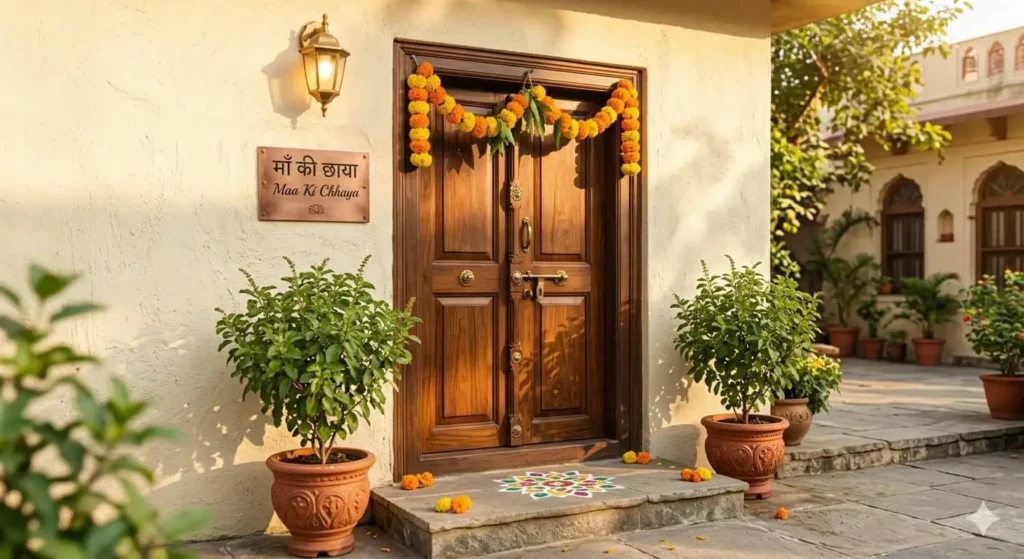
Best Directions for the Main Entrance
Vastu divides each side of the house into parts, called padas, and some parts are considered better for a door than others. The general guidance is:
| Facing direction | Traditional view | Notes |
|---|---|---|
| North | Very favourable | Linked with Kubera, the god of wealth; good for prosperity |
| East | Very favourable | Faces the rising sun; linked with health and new beginnings |
| North-east | Most auspicious | The Ishaan corner, linked with Lord Shiva and purity |
| West | Generally acceptable | Considered good for stability and gains in many schools |
| North-west | Acceptable | Linked with air and movement; some prefer the north side of it |
| South | Use with care | Many schools allow certain padas; remedies are often suggested |
| South-east | Use with care | Fire corner; better suited to the kitchen than the door |
| South-west | Usually avoided | Considered heavy and best kept closed and solid |
A south-facing home is not bad by itself. Many Vastu experts say the exact position of the door along the wall matters more than the direction alone, and suggest remedies when needed. If your entrance faces south, ask an expert before making changes.
Vastu for Main Entrance Door Design
Size
Vastu for main entrance says the main door should be the largest door in the house, larger than all internal doors. It should feel welcoming, not cramped.
Material
Solid wood, especially teak or sheesham, is the traditional favourite. Metal doors are sometimes suggested for west or north-west entrances. Avoid broken, cracked or damaged doors.
Opening Direction
The door should open inward, into the home, and usually clockwise. This is seen as inviting energy in. It should open fully without hitting furniture or walls.
Sound and Movement
A creaking or squeaking door is considered unlucky in Vastu and is simply annoying in daily life. Oil the hinges regularly and fix any loose fittings.
Two Shutters
Many traditional homes use a double door with two shutters, which is considered auspicious and makes moving large furniture easier.
Threshold
A raised threshold, called the dehleez or umbartha, made of wood or marble, is traditionally believed to keep negative energy out. It also stops dust and water from blowing in.
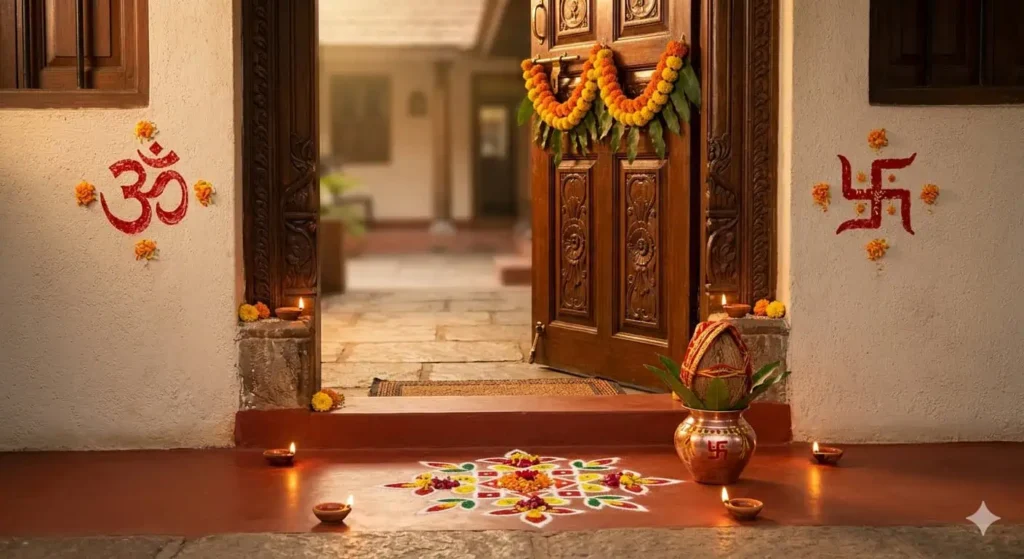
Colours for the Main Entrance
Vastu for main entrance generally favours light, warm and natural colours at the door: cream, light yellow, wood tones and soft earthy shades. Very dark or gloomy colours, such as black for the whole door, are usually avoided.
Some Vastu schools suggest colours by direction, but advice varies widely. A safe, popular approach is a natural wood finish for the door and a light, clean colour for the surrounding wall, which also helps your nameplate stand out.
Lighting at the Entrance
Good light is one of the most important Vastu for main entrance tips, and the easiest to get right. A bright, well-lit entrance is believed to invite positive energy, and it makes the home safer and easier to find at night.
- Install a warm light above or beside the door and keep it working.
- Light a diya or lamp at the entrance in the evening, especially on festivals.
- Replace fused bulbs quickly; a dark entrance is considered inauspicious.
- Let morning sunlight in if the door faces east or north-east.
What to Keep at the Main Entrance
- A toran. Mango leaves and marigolds tied above the door are a traditional welcome.
- Auspicious symbols. Om, swastik, Shubh Labh or a small Ganesha above the door, facing outward, are common choices.
- A clean doormat. It keeps dust out; replace it when worn.
- A rangoli. Especially on festivals and for the Griha Pravesh.
- Healthy plants. Tulsi, money plant or flowering plants in clean pots on either side.
- A clear nameplate. More on this below.
If you keep a Ganesha at the entrance, see our Ganesha house names for names that go with it.
What to Avoid at the Main Entrance
- Shoe racks right in front of the door. Keep footwear to one side or inside a closed cabinet.
- Dustbins and clutter. Keep the area clean and clear.
- A mirror facing the main door. Many Vastu schools believe it reflects energy back out.
- Thorny plants such as cactus right at the door.
- Obstructions such as a pole, tree or pillar directly in front of the door, known as a dwar vedha.
- Broken items, including cracked tiles, damaged bells or a broken nameplate.
- Two main doors directly facing each other in flats, where possible; a toran or plant can soften it.
Vastu for Nameplate: Where and How to Place It
The nameplate is part of Vastu for main entrance because it is the first thing that identifies your home. Here are the most common guidelines.
Position
Place the nameplate on the wall beside the main door, at or slightly above eye level, where it is easy to read. Many families prefer the left side as you face the door, but follow your family’s custom or your expert’s advice.
Condition
Keep it clean, straight and in good repair. A cracked, faded or crooked nameplate is considered inauspicious, and it does not look good either.
Material by Direction
A common suggestion is metal (brass, steel) for west- and north-facing entrances and wood for east- and south-facing ones. If in doubt, a good-quality brass or wooden plate suits almost every home.
Readability
Use clear letters with good contrast so the name can be read from a distance. Avoid tiny, faint or overly decorative fonts.
No Holes or Gaps
Many Vastu experts suggest avoiding nameplates with holes, gaps or broken edges, and fixing the plate firmly so it does not hang loose.
Lighting
Light the nameplate at night with a small lamp or a backlit design. It is both a Vastu tip and a practical one.
For design ideas, see our guide to house name plate designs, and for the name itself, browse our house names lists.
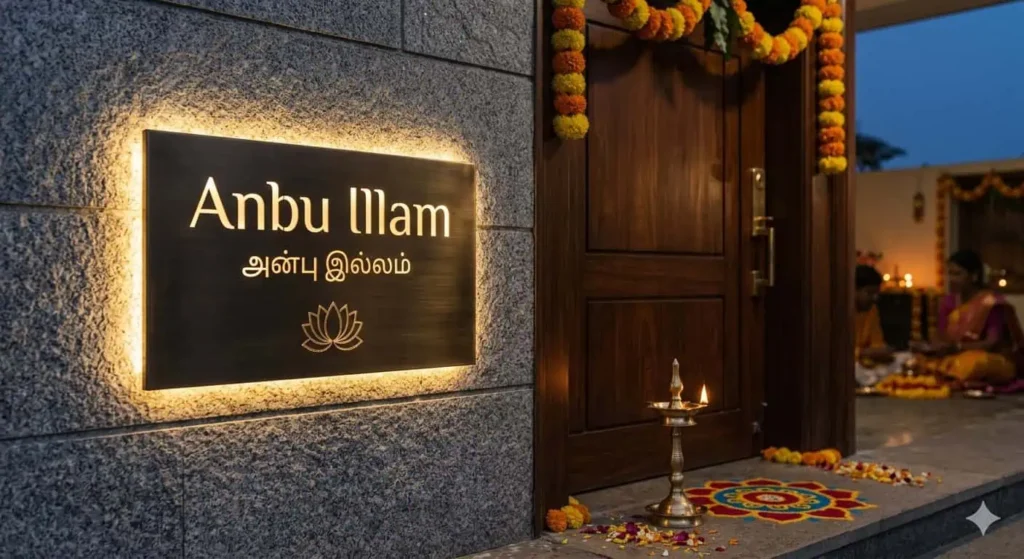
Vastu for Main Entrance in Flats
In an apartment, you can’t choose the direction of the door, but you can still follow most Vastu for main entrance tips.
- Keep the corridor area outside your door clean and well lit.
- Place a bright toran, a small rangoli or two healthy plants by the door.
- Use a clear nameplate with the flat number. Our flat names guide has short names that suit small plates.
- If your door faces a neighbour’s door, a toran or a small decorative item can soften the effect.
- Keep shoes inside a closed rack, not piled at the door.
Simple Remedies Often Suggested
If your entrance does not match the ideal, Vastu experts commonly suggest simple, non-structural remedies. These are traditional beliefs, so use them if they bring your family peace of mind.
- A Ganesha or Hanuman image above the door, facing outward. See our Hanuman house names for names that pair with this.
- A swastik, Om or Shubh Labh on or beside the door.
- A toran of fresh mango leaves, changed regularly.
- Bright lighting at the entrance in the evening.
- Keeping the threshold clean and washing it regularly.
Vastu for Main Entrance: Myths and Facts
There is a lot of confusing advice online about Vastu for main entrance. Here are a few common worries, and a calmer way to think about them.
“A south-facing home is always unlucky”
Many traditional texts allow certain door positions on the south side, and plenty of happy families live in south-facing homes. Vastu for main entrance is about the exact door position and how you care for it, not the direction alone.
“You must break walls to fix Vastu”
Most Vastu for main entrance advice is about light, cleanliness, decoration and the nameplate. Structural changes are rarely needed and should never be done without an engineer and an expert.
“Expensive remedies are required”
The most important tips, such as a clean doorway, good light and a tidy shoe rack, cost almost nothing. Be cautious of anyone selling costly products as the only solution.
Vastu for Main Entrance: Quick Actions by Direction
| Your door faces | Quick actions often suggested |
|---|---|
| North or north-east | Keep it bright, clean and open; tulsi or money plant nearby |
| East | Let morning light in; keep the threshold washed and clear |
| West | Use a sturdy door and a metal nameplate; good lighting |
| North-west | Keep the door smooth and quiet; wind chimes are a popular addition |
| South | Ganesha or Hanuman image above the door, a toran and bright lighting |
| South-west | Strong, solid door; consult an expert about remedies |
30-Point Vastu for Main Entrance Checklist
Here are all the key tips in one place. They are also in the free PDF.
| # | Tip | What to do | Traditional reason |
|---|---|---|---|
| 1 | Favourable direction | Prefer north, east or north-east facing doors | Linked with prosperity and light |
| 2 | Largest door | Main door bigger than internal doors | Marks it as the main entry |
| 3 | Solid material | Use good-quality wood or sturdy metal | Strength and protection |
| 4 | Opens inward | Door opens into the house | Invites energy in |
| 5 | Clockwise opening | Hinges set for a clockwise swing | Common Vastu preference |
| 6 | No creaking | Oil hinges regularly | Smooth, peaceful entry |
| 7 | No damage | Repair cracks and broken parts | Damage seen as inauspicious |
| 8 | Threshold | Raised wooden or marble threshold | Keeps negativity and dust out |
| 9 | Light colours | Cream, wood or warm tones | Welcoming and bright |
| 10 | Bright lighting | Working light at the entrance | Invites positive energy |
| 11 | Evening lamp | Light a diya at dusk | Traditional blessing |
| 12 | Toran | Mango leaves and marigolds above the door | Welcome and purity |
| 13 | Sacred symbols | Om, swastik or Shubh Labh | Protection and good fortune |
| 14 | Ganesha | Small idol or image facing outward | Remover of obstacles |
| 15 | Clean doormat | Replace when worn | Keeps dust out |
| 16 | Rangoli | On festivals and special days | Auspicious welcome |
| 17 | Healthy plants | Tulsi or money plant in clean pots | Freshness and life |
| 18 | No cactus | Avoid thorny plants at the door | Thorns seen as negative |
| 19 | Shoes away | Use a closed rack to one side | Keeps the entrance clean |
| 20 | No dustbin | Keep bins away from the door | Avoids clutter |
| 21 | No mirror facing door | Place mirrors on side walls | Mirror believed to reflect energy out |
| 22 | No obstruction | No pole or pillar right in front | Avoids dwar vedha |
| 23 | Clear path | Nothing blocking the door’s swing | Free flow of movement |
| 24 | Nameplate placed | Beside the door at eye level | Identifies the home clearly |
| 25 | Nameplate clean | Polish and wipe regularly | Shines like the home’s fortune |
| 26 | Nameplate intact | No cracks, holes or loose fixing | Wholeness and stability |
| 27 | Readable name | Clear letters with good contrast | Easy to find the home |
| 28 | Nameplate lit | Lamp or backlit design | Visible and welcoming at night |
| 29 | Good name | Choose a positive, meaningful name | Sets the mood of the home |
| 30 | Auspicious day | Fix the plate on a muhurat day | A blessed beginning |
Vastu for Main Entrance on Griha Pravesh Day
The housewarming is the perfect time to set up your entrance. After the Ganesh puja, many families tie a fresh toran, draw a rangoli, place a kalash at the door and unveil the new nameplate. Our Griha Pravesh muhurat 2027 guide lists auspicious dates for the year.
Still arranging the finances for your new home? See our guides to the EMI for a 50 lakh home loan and home loans for first-time buyers.
Download the Vastu Checklist PDF
Download the free PDF with all 30 Vastu for main entrance and nameplate tips. Print it and tick them off as you set up your entrance.
Conclusion
Good Vastu for main entrance comes down to a few simple habits: a favourable direction where possible, a strong and welcoming door, light, cleanliness and a clear, well-kept nameplate. Most of these tips cost little and make your entrance more beautiful and practical, whatever you believe. Save the checklist, and tell us in the comments which tip you will try first.
FAQs on Vastu for Main Entrance
Which direction is best for the main entrance as per Vastu?
North, east and north-east are traditionally considered the most favourable. West and north-west are generally acceptable, while south-west is usually avoided.
Is a south-facing main door bad?
Not necessarily. Many Vastu experts say the exact position of the door on the south wall matters, and they often suggest simple remedies. Consult an expert for your home.
Where should I place the nameplate as per Vastu?
On the wall beside the main door, at or slightly above eye level, clean, straight and well lit. Many families prefer the left side as you face the door.
Which material is best for a nameplate in Vastu?
A common suggestion is metal for west- and north-facing doors and wood for east- and south-facing ones. Brass and good-quality wood suit most homes.
Can I keep shoes near the main door?
Vastu suggests keeping shoes away from the front of the door, ideally in a closed rack to one side.
Should a mirror face the main door?
Many Vastu schools advise against it, as a mirror is believed to reflect energy back out. Place mirrors on a side wall instead.
Which plants are good at the main entrance?
Tulsi, money plant and flowering plants in clean pots are popular. Thorny plants like cactus are usually avoided at the door.
Is Vastu for main entrance possible in a flat?
Yes. You can’t change the direction, but you can keep the entrance clean, well lit and decorated, and use a clear nameplate.
What is the most important Vastu for main entrance tip?
Keeping the entrance clean, bright and free of clutter. It is simple, costs little and is recommended by almost every Vastu school.
Should the main door open inward or outward?
Vastu for main entrance recommends a door that opens inward, into the home, usually in a clockwise direction.
Is there a PDF of these Vastu tips?
Yes. You can download the free PDF with the full 30-point checklist.